
Serve Remediation: Getting the Timing Right
Serve Remediation: Getting the Timing Right
A Reader’s Question
Another question this week from a reader:
“How do I fix my serve? My hands feel disconnected.”
That description is precise.
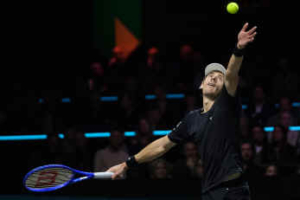
What they’re experiencing is a recurring service pattern we refer to as “broken hands syndrome”—the premature or deliberate separation of the hands during the service motion. which upsets the timing.
Iga Świątek’s serve is a well-known example of this early hand separation model.
In some players, it develops unintentionally. In others, it is taught deliberately to simplify rhythm or reduce moving parts. While this approach can appear controlled and technically tidy, it often disrupts the integration of the kinetic chain.
The serve may look organized. But it feels disconnected. That sensation is accurate.
Why It Matters Under Pressure
In neutral conditions, early hand separation may not appear problematic. Under pressure, however, sequencing stability becomes decisive.
When the arms initiate independently of the lower body:
-
The motion tightens
-
Timing narrows
-
Acceleration becomes shoulder-dominant
The outcome is predictable: late contact, reduced spin margin, and too often a double fault. More damaging than the error itself is the erosion of confidence that follows.
When sequencing feels unstable, the player senses it immediately. Once doubt enters the service motion, performance rarely self-corrects.
The Structural Issue
When the hands separate too early, the loading phase becomes segmented.
Ideally, the serve begins with a unified lift. The hands travel down together long enough to establish natural rhythm and coordinated loading:
-
Progressive knee flexion
-
Hip engagement
-
Trunk coiling
-
Elastic tension development
If separation occurs before the legs begin to load, the arms begin acting independently of the lower body. The sequence shifts from ground-up to arm-led.
This shift may not immediately affect placement. In fact, some players feel more “in control.”
However, it typically lowers the ceiling for pace, spin, and repeatability—especially in competitive situations.
Observable Consequences
Common indicators of early hand separation include:
-
Minimal knee flexion at the moment of hand break
-
Early drop of the tossing arm
-
A more vertical, less coiled trophy position
-
Increased reliance on shoulder acceleration
The motion can appear technically neat.
But the kinetic chain is no longer fully integrated.
Restoring Connection
Remediation is not about forcing the hands to stay together artificially.
It is about reconnecting separation to leg loading.
A simple cue:
“Both hands go down and up together.”
The hands should separate in response to lower-body engagement—not in advance of it.
From there:
-
Rehearse slow, unified lifts
-
Confirm knee flexion precedes separation
-
Reintroduce pace gradually
Once the body feels stable, it becomes easier to maintain a connected lift—with the hands working together to support balance and properly engage the kinetic chain.
Wrap
Early hand separation is not inherently wrong. It is a stylistic choice in some models.
But for players who feel disconnected—or who struggle under pressure—it is often the first structural variable worth examining.
Restore the sequence. Reconnect the lift to the load. Confidence tends to follow structure.
Source AP: Broken Hands


