

Let’s talk about something many of us would rather ignore: plantar fasciitis — that sharp, aching pain in the heel or arch that shows up during or after a match and doesn’t leave quietly.
Speaking from experience:
Once plantar fasciitis shows up, it becomes an age-related nuisance. It rarely disappears entirely. It flares up, calms down, then reminds you it’s still there when you least expect it — usually in the middle of a winning streak!
But here’s the good news: it can be managed.
What Is It, Really?
Plantar fasciitis is inflammation of the thick band of tissue (plantar fascia) that connects your heel to your toes. In tennis players — especially those over 40 — it’s often caused by:
-
Tight calves and hamstrings
-
Poor foot mechanics or worn shoes
-
Overuse (too much play, not enough recovery)
-
Hard court surfaces and sudden direction changes
How to Manage It
1. Prioritize Rest
This isn’t something to push through. Playing on it just digs a deeper hole. Rest is recovery — not weakness.
2. Do the Rehab
-
Daily calf and foot stretches
-
Rolling a frozen water bottle or lacrosse ball underfoot
-
Strengthening the foot muscles (toe curls, towel scrunches)
-
Consider orthotics or arch support insoles
3. Don’t Rush Back
Return slowly. Mix in doubles or easy hitting before jumping into competitive play. Build your load with intention.
Mental Shift
Treat it like a long-term training partner, not an enemy. You’ll have flare-ups — especially after tough matches or long gaps between play — but with proper care, you can keep playing. The key is consistency and patience.
Wrap
If you love the game, learn to work with your body — not against it. Plantar fasciitis may not vanish, but it doesn’t have to bench you either.
Play smart. Play steady. Play for life.
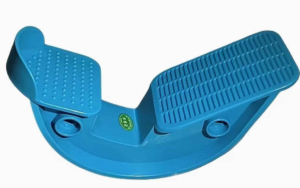
A physio I used to play tennis with in Newport Beach — swore by this rocker and used it religiously.
 https://www.tenniswhisperer.com/wp-content/uploads/2023/12/LOGOWhisperer150.png
150
150
Rob
https://www.tenniswhisperer.com/wp-content/uploads/2023/12/cropped-LOGOWhisperer1024-300x300.png
Rob2026-01-31 10:23:192026-01-31 10:23:19Teaching Tennis Players to Think: Lessons from an English Classroom
https://www.tenniswhisperer.com/wp-content/uploads/2023/12/LOGOWhisperer150.png
150
150
Rob
https://www.tenniswhisperer.com/wp-content/uploads/2023/12/cropped-LOGOWhisperer1024-300x300.png
Rob2026-01-31 08:51:192026-01-31 08:52:50It Was a Hard Day’s Night at the AO
https://www.tenniswhisperer.com/wp-content/uploads/2023/12/LOGOWhisperer150.png
150
150
Rob
https://www.tenniswhisperer.com/wp-content/uploads/2023/12/cropped-LOGOWhisperer1024-300x300.png
Rob2026-01-28 15:29:112026-01-28 15:52:36De Minaur 3.0: A Smarter Blueprint
https://www.tenniswhisperer.com/wp-content/uploads/2023/12/LOGOWhisperer150.png
150
150
Rob
https://www.tenniswhisperer.com/wp-content/uploads/2023/12/cropped-LOGOWhisperer1024-300x300.png
Rob2026-01-31 10:23:192026-01-31 10:23:19Teaching Tennis Players to Think: Lessons from an English Classroom
https://www.tenniswhisperer.com/wp-content/uploads/2023/12/LOGOWhisperer150.png
150
150
Rob
https://www.tenniswhisperer.com/wp-content/uploads/2023/12/cropped-LOGOWhisperer1024-300x300.png
Rob2026-01-31 08:51:192026-01-31 08:52:50It Was a Hard Day’s Night at the AO
https://www.tenniswhisperer.com/wp-content/uploads/2023/12/LOGOWhisperer150.png
150
150
Rob
https://www.tenniswhisperer.com/wp-content/uploads/2023/12/cropped-LOGOWhisperer1024-300x300.png
Rob2026-01-28 15:29:112026-01-28 15:52:36De Minaur 3.0: A Smarter Blueprint