
HOW THE PROS POLISH PADDLE POWER: SMH

TABLE TENNIS
Jordan Baker, SMH 5Aug
If table tennis Olympian Nicholas Lum had used a backyard table and a store-bought racquet, he’d wouldn’t be in Paris. ‘‘ It’s like asking Mick Fanning to surf on an ironing board,’’ says his coach, Jens Lang.
A hand-carved racquet costs Lum more than $1000 and he buys special rubber for his bat at $100-plus a throw. He plays on meticulously measured tables.
He trains for nine months a year at a German academy akin to the champion factory that produced Andre Agassi. Australia might be big on pingpong , the casual version kids play in parks and tech bros put in offices , but it’s a laggard in table tennis, the serious form. It has none of the professional leagues common in Europe and Asia.
Still, Australians tend to think they’re great at it – and even better after a few beers. Lum’s a good sport about the chest-beating backyard warriors that talk a big game. ‘‘ We’re not offended,’’ he says, when they call it ping-pong .
Table tennis has had a celebrity moment in Paris after American basketballers Stephen Curry and Anthony Edwards struck up a friendship with the US team on the opening-ceremony boat when Edwards trash-talked them about his ping-pong prowess.
Lum’s been hit up for games at the Olympic village table by fellow Australian athletes, swimmers and sprinters among them. One runner, who gets annoyed when people ask her to race them, asked whether Lum gets irritated when people ask him for games. He doesn’t . ‘‘ For us, it’s fun,’’ says the 19-year-old . ‘‘ I mean, it’s not so much energy we’re putting into playing.’’ Normally, Lum and teammate Min Hyung Jee, 37, put a lot of energy into playing.
They train at the table for six hours a day over two sessions. They practise shots over and over, then some more. The ball is so fast, said Lang, that even a split-second reaction is too slow. ‘‘ You need to train so that your movements are automatic,’’ he says. ‘‘ A lot of repetition.’’
The players also train at the gym because a strong core is essential. ‘‘ Hand-eye coordination is very important,’’ he said. ‘‘ Athleticism, quick, explosive movements – that’s extremely important. Core strength. Stability.’’
Table tennis players have a long shelf life. Luxembourg’s Ni Xialian competed in her sixth Olympics at age 61. Chile’s Zeng Zhiying made her Olympic debut at 58, 40 years after narrowly missing selection for Los Angeles. But that doesn’t mean the rest of us can pick up a bat and aim for Brisbane 2032. ‘‘ Even if you start at 20 you’re not going to get anywhere in table tennis,’’ Lang says. ‘‘ If you want a medal at the Olympic Games you need to start at five or six. Table tennis is an unbelievably competitive sport at the international level.’’ China, Japan and France top the rankings (a 17-year-old Frenchman, Felix Lebrun, is the world No.5).
Lum’s father was a passionate table tennis player and he started early. Now he spends most of his time at the German academy, and will play overseas because even the best Australian players can’t make a living at home. Jee picked it up at nine years old. A coach spotted her natural talent and she’s been playing ever since. She doesn’t need a day job because there are professional leagues throughout Europe and Asia (she has played for a French team). Lang, who was semi-professional in his native Germany, is determined to get Australia serious about table tennis, to spot talent early and nurture it, and to increase the opportunities for people to play not just for fun but for success. ‘‘
There’s heaps of opportunities in the sport in Australia,’’ he says. Lum competes in the men’s team event today, and Jee in the women’s team on Tuesday.


Toughest Feat in Tennis

Players often say that the toughest feat in tennis is to win the French Open and Wimbledon in the same year. Alcaraz has a shot at it this year.

It’s a monumental challenge, requiring players to dominate the grueling, high-bouncing clay of Roland Garros—basically the tennis equivalent of playing on quicksand—before swiftly adapting to the slick, fast grass courts of Wimbledon, where the ball skims just above the grass. Here’s a fun trivia question: How many men and women have managed to join this exclusive double club?

Rod Laver pulled it off once in the modern era of tennis, which kicked off in 1968. Bjorn Borg managed it three times. Rafael Nadal did it twice. Roger Federer and Novak Djokovic have each done it once. That’s it for the men.

For the women, Margaret Court, Evonne Goolagong, Billie Jean King, and Chris Evert each did it once. Martina Navratilova and Serena Williams both did it twice. Steffi Graf, though, achieved it four times. That’s the complete list.

Tiebreaks & Swiatek

Iga Swiatek, currently the world’s top tennis player, just added an exhilarating chapter to her career. She now boasts 20 WTA Tour titles, including four Grand Slams, and has been the world’s top player for over 100 weeks. Recently, she conquered a new milestone—winning a deciding-set tiebreak.

In an epic final against Aryna Sabalenka, the world No 2, Swiatek saved three match points on her way to victory, pushing her head-to-head advantage to 7-3. This was only her third deciding set tiebreak in her professional career, having previously faced tough losses in such scenarios. But this time, in a Masters final no less, she showcased her resilience and tactical prowess.

Swiatek’s knack for turning a slight lead into an unassailable advantage is legendary. Yet, what stood out in this match was her capacity to thrive under intense pressure, a skill she’s had less need to display due to her dominant play style. This victory was a testament to the high caliber of women’s tennis in 2024, making it a phenomenal showcase for fans and a thrilling achievement for Swiatek herself. After the match, she reflected on the experience, noting, “It’s going to give me some wisdom,”—a statement that hints at even greater things to come from this formidable champion.

Swiatek Defeats Gauff in Straight Sets: A Teaching Moment in Overplaying

Iga Swiatek triumphed over Coco Gauff in straight sets (6-2, 6-4) to secure her spot in her fourth French Open final. Gauff’s impressive run at Roland Garros ended once again at the hands of Swiatek, the world’s No. 1 player who is increasingly becoming the dominant force in women’s tennis, particularly on clay.

Swiatek played a solid game, capitalizing on Gauff’s errors and delivering powerful winners. Gauff attempted to change her tactics by playing more aggressively, similar to Naomi Osaka’s approach, but ended up overplaying, which led to numerous unforced errors. Despite her efforts to rush Swiatek and throw everything she had at her, Gauff couldn’t maintain the consistency needed to prevail.

After the match, Swiatek mentioned she had adjusted better to the court and atmosphere, which helped her overcome the challenges she faced earlier in the tournament. Gauff, despite her aggressive tactics, was unable to break Swiatek’s momentum, marking another day of frustration against a player who may continue to dominate for years to come.

French Open Umpires Use Head-Mounted Cameras for Unique Fan Perspective

During a recent night match at the French Open, viewers saw something new: umpires wearing head-mounted cameras. Inspired by the movie *Challengers*, these cameras offer a unique angle, capturing the fast-paced action right from the court level. The French Tennis Federation introduced this innovation to bring fans closer to the game, showcasing the speed and skill of the players in a way traditional TV angles cannot.

Pascal Maria, the assistant referee, emphasized that umpires have the best view in the stadium, and this technology aims to share that perspective. Initially intended to provide dynamic footage of gameplay, the head cameras now focus on showing the ball marks during line call reviews. However, this hasn’t been as effective, as the footage is often too quick to be useful live.

Despite its mixed success, the head cameras provide an unfiltered look at interactions between players and umpires, offering insights into the emotional and intense exchanges that happen on court. While other Grand Slams are not yet adopting this technology, the French Open’s experiment has given fans a new way to experience the game, highlighting both the innovation and challenges of integrating new tech into sports.

Finding a Way: de Minaur Grinds Out Three-Hour Clay Battle in Rome

Alex de Minaur just won a thrilling three-hour win on the clay at the Foro Italico, taking down the tough Felix Auger-Aliassime to make it to the last 16 in Rome.

After a rocky start and losing the first set in a tie-break, Alex turned things around big time to clinch the match 6-7 (2-7), 6-4, 6-4.

He faced some tense moments in the final set, even letting a 3-1 lead slip away, but he broke back in the ninth game and served out the match.

Alex shared after the match, “Felix is really tough on clay, and he came in riding high on confidence, so I’m stoked about how I kept my cool and stayed positive throughout. There were moments I could’ve sealed it earlier, but hey, I regrouped, and I’m super happy with how I handled it.”

This win against a top-20 player on clay is a big deal for Alex, marking only his second time pulling it off in 13 tries!

What’s the Origin of the Scoring System in Tennis

Tim inquired about the origins of tennis’s unique scoring system.

Responding with expertise, Tony R, our knowledgeable historian and avid student of the game, shared his findings: “Greetings, Tim. After investigating your query regarding the tennis scoring system’s origins, it appears to stem from the 12th-century French sport ‘je de paume’ (handball), where the face of a clock was used for scoring—0, 15, 30, and 45. When rackets were introduced, the score of 45 was adjusted to 40, and the game eventually came to be known as tennis, or ‘tenez’ in French.
A classic example of the French making things overly complicated!”

Appreciation to Tony!


BADGE 2024 FACT SHEETS

Sydney Badge League has published their Fact Sheets for 2024 Thursday Ladies & Saturday Men’s/Women’s Badge Leagues.

Click here for details on MLTC site


Medvedev: Mind over Matter

Russian Daniil Medvedev recovered from two sets down to outlast  Zverev, 5-7 3-6 7-6 7-5 6-3 in a gruelling semi-final and join Sinner in Sunday’s final.

“I was a little bit lost,” Medvedev admitted to Jim Courier when they were finally done, “but during the third set I started saying to myself that if I lose this match, I just want to be proud of myself. I want to fight until the end, fight for every point, and if I lose, I lose. And I managed to win, so I’m very proud.”

Medvedev has been sweating it out there for more than 20 hours, lost eight sets and twice recovered from two sets down. No-one has done that at the Australian Open since Pete Sampras in 1995. Small wonder Medvedev looked bedraggled when he was done. Then again, he always looks that way.

Quirky as ever, but less irascible, Medvedev at last has won fans and favour in this tournament. It’s been by design. He said he had decided between seasons to make a concerted effort to avoid aggravation – from opponents and crowds – and channel all his powers into his tennis.

“I want to play tennis. I want to be proud of myself. I want to fight. So could this help me win all of these matches? Possibly, yes. But I also don’t want to say yes one month ago I decided this and then suddenly I’m winning all these matches. Life is not that easy.

The first set could have been a chapter from Sun Tzu’s The Art Of War. Having played 18 times previously, it was as though they knew each other’s game so well that neither could surprise each other strategically. It made for an intriguing deadlock.

Medvedev used his patent return-of-serve tactic, standing so far behind the baseline that he was not so much receiving as fetching. In a manner, it worked.

In the second set, Zverev, though an inconsistent net player, decided to exploit all the space Medvedev was giving him by advancing on the net more often. It worked; two more breaks sped him to a 2-0 lead. Ordinarily, you might have expected Medvedev to have a Plan B up his own sleeve. Perhaps he did, but he was serving too poorly for it to matter. In the first two sets, Zverev broke him five times.

Back against the wall, Medvedev moved up the court, trying to crowd Zverev’s serve, doubling his few net approaches and retrieving spectacularly several times. It worked. At these closer quarters, Medvedev’s smarts told, though Zverev stayed with him to the tie-breaker.

Bit by bit, this grew into a saga. In the fourth set, Medvedev fashioned one break point with a perfect stop volley, another two points later with a pinpoint lob. Either would have led to him serving out the set.

But Zverev saved both with big serves, and then Medvedev appeared to have self-immolated when a double fault in the tie-breaker delivered Zverev’s seeming victory on a platter. But he didn’t take it, and in a cruel twist, Medvedev horribly framed a return of serve, only for it to plop over the net to send the match into a fifth set.

Five games into the fifth set, the match reached its last pass when a tiring Zverev netted a volley to fall two break points down. Sorely knowing the implications, the German belted his racquet into the offending net. Duly, he lost the game, and with it the last of his earlier momentum, and Medvedev won the mental game! Extraordinarily, having lost his serve five times in the first two sets, he was not broken again for the match.

“I would say this court is not my best court in terms of my performance and my actual self-esteem,” he said to Courier. “That’s why many times I had to dig deep during this tournament. So I’m gonna be the happiest man on the planet (if I win). But for this I need to play pretty well and win three sets on Sunday.”

Source: SMH


How to Find a Way to Win

Mirra Andreeva somehow rallied from a 1-5 final-set deficit on Friday to eliminate Frenchwoman Diane Parry. Along the way, Andreeva tossed her racquet in disgust, and bit so hard into her left arm that she left a mark.
‘‘ At 5-1 , I don’t know, I just tried to win at least one more game to not go 6-1 , 1-6 , 6-1 . What is that score?’’ Andreeva said. ‘‘ I just tried to win one more game to at least be 6-2 in the third.
Then [at] 5-2 , she has match points. I’m going to the net. I’m thinking, ‘Am I crazy?’. I’m going to the net on match point. But then she missed a ball.
The adrenaline [kicked in], the desire, the feeling that I want to win … I feel like when you’re coming back from this score, it’s kind of easy on a mental side for you.
It’s easier than for your opponent because you’re on the run, you have all the adrenaline. That’s what I had today.’’
Now, to explain Andreeva’s bemusement towards being at the net at such a crucial moment. She ventured to that unfamiliar territory only nine times!
Source SMH 21Jan25
… 
Please excuse any typos as this was sent from my iPhone


Seaside Results 2023

The Dreaded Tennis Elbow | AskThePro

Recently, I have a reoccurrence of the dreaded tennis elbow. What can I do about it?

Unfortunately, sooner or later, most of us have to suffer through the dreaded tennis elbow.  Between 10 and 50 percent of players suffer from tennis elbow so you’re not alone. And as most of us find out – rest doesn’t help.

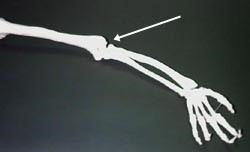
Tennis elbow occurs when repetitive forces cause micro-trauma injuries to the tissues around the elbow.  Common initiating factors include: using a new racket, using nylon strings that are too tight, oversized grips, playing in the wind, hitting ‘heavy wet balls.

In addition, if you suddenly increase your playing intensity and couple this with poor technique, especially the backhand and serve, you reduce your body’s ability to withstand these forces and develop tennis elbow. Striving for that little extra can really hurt you!

In a study by Kelley (1994): “sufferers showed poor body positioning and greater involvement of their forearm extensor muscles. They also showed rapid change from wrist flexion to wrist extension when striking the ball and early in the follow-through. This placed the wrist in an unstable position to withstand repeated forces. Importantly, the backhand stroke heightened these differences.”

If you are suffering from tennis elbow, you will have pain radiating down the lateral side of your elbow or stiffness in this area. Your symptoms may disappear if you stop playing, but this is obviously self-defeating. If you consult a doc, they’ll suggest anti-inflammatory drugs, injections, and RICE (rest, ice, compression and elevation) method. These, however, merely treat the symptoms and don’t address the underlying factors that caused the injury.

Another paper by Noteboom (1994) suggested 5 stages of treatment for tennis elbow: 1. Reduce pain, 2. Reduce inflammation, 3. Induce the healing process, 4. Maintain fitness, and 5. Control force placed on injured tissues.

Part of reducing the pain and inflammation is to get the inflamed tendons and muscles to ‘release’ (this is why some people have success with acupuncture). Typically the muscles and tendons are displaced away from your body causing your arm to be ‘bent’ and exacerbating the stress on the elbow point. You need to find the pressure (i.e pain) point, and gradually increase the pressure there until you feel the muscle release – sometimes takes a couple of minutes depending on how extreme your case!.

Repeat liberally and at the same time, start hot massage beginning at the wrist and gradually work your way up to the elbow to both release and stimulate blood flow to the muscles and tendons. Be patient, since there’s typically little blood flow to tendons which is why it takes time for the inflammation to go down. Gradually you’ll see your arm “unbend” as the muscles and tendons return to proper alignment.

In my own case, it takes about 10 days to get my elbow in reasonable shape if I’m diligent. Thereafter, after I’ve completed stages 1-3, I use a series of stretching exercises coupled with reducing the force in hitting the ball.  Racket stringing technology is developing all the time and I’ve found that one of Gamma’s strings, Live Wire, definitely eases the force on my arm.  While it might costs a few $$ more for a restring, even so, you’ll easily make up for this in frustration and injury reduction.

Candidly, putting the right strings in your racket is worth at least a point-a-game advantage in power, control, and injury prevention! If you can afford the technology, buy it!! Likewise, if you worried about your technique, spend a few $$$ on lessons.

Rob, USPTA Pro

Tennis Whisperer

Mastering Tennis Requires an All-Court Style

The tennis court at Arthur Ashe Stadium appears smooth, but the microscopic structure of sand granules in the acrylic paint significantly affects match dynamics. The size, shape, and density of the sand dictate the ball’s speed post-bounce, with the U.S. Open surface being “medium-fast,” resulting in fewer long rallies and quicker matches. This pace is deliberately chosen by organizers using devices that measure friction and restitution.
Players like Daniil Medvedev have criticized court speeds, as variations can affect match outcomes. For example, the medium-slow courts at Indian Wells play differently than the medium-fast courts in Miami. Organizers try to control court pace; for instance, Wimbledon switched to 100% ryegrass for firmer courts, and the U.S. Open added sand to the line paint to minimize ball sliding.
Despite these efforts, top players like Carlos Alcaraz and Iga Swiatek consistently win regardless of surface speed. The pace affects playing styles, with faster surfaces favoring offense and slower ones requiring defensive skills and patience. Rafael Nadal, dominant on slow clay courts, had to adopt a more attacking style for hardcourts. The U.S. Open resurfaces its courts annually to ensure consistency. The surface, made by Advanced Polymer Technology, impacts the ball’s speed, trajectory, and spin.
Ultimately, mastering tennis requires an all-court style, as top players like Swiatek, Aryna Sabalenka, Alcaraz, and Novak Djokovic have demonstrated their adaptability to different court speeds.

Court speeds at major tournaments in 2023

TOURNAMENT

COURT SURFACE

PACE RATING

French Open

Clay

Slow (29 or less)

Indian Wells

Hard

Medium-slow (30-34)

Western & Southern Open

Hard

Medium (35-39)

Miami Open

Hard

Medium-fast (40-44)

Australian Open

Hard

Medium-fast (40-44)

U.S. Open

Hard

Medium-fast (40-44)

Wimbledon

Grass

Fast (45 or more)

Source:  https://www.nytimes.com/interactive/2023/09/02/sports/tennis/us-open-tennis-court-speed.html

Moneyball Comes to Tennis

Tennis is on the verge of a belated Moneyball revolution. In the northern spring, the Association of Tennis Professionals, which runs the men’s tour, is planning to open up ball-tracking data from every match to all its players and coaches.

The shift will do much to level an uneven playing field. Until now, millionaire players such as the “Big Four” men have had the opportunity to buy better-quality data analysis than their less wealthy rivals.

One might imagine that access to data would be a basic right for all leading professionals. In fact, anyone wanting to use the information gathered by Hawk-Eye, the leading ball-tracking provider since 2014, has had to pay a £150 ($263) processing fee per match. On top of that, tour rules say you can order data only from matches you played in.

In April, this will change. “We want to give players more equal access to this information,” says Ross Hutchins, the Association of Tennis Professionals’ chief tour officer. “We believe it will improve performance levels. We are looking to bring player and ball-tracking online from every ATP tournament. We’re hoping to make this happen by the second quarter of 2023, and then bring in wearable technology, such as heart monitors and GPS location devices, by the second half of the year.”

Despite the relatively large amount of money at stake, tennis must rank as one of the most backward major sports when it comes to sophisticated data analysis, mainly because there are few economies of scale.

Six-figure sums for data

If you are lucky enough to come from a grand-slam nation such as Great Britain or the United States, you can usually dip into your federation’s sizeable dataset. Otherwise, the only way to gain access to more than a tiny percentage of matches is to hire one of the big analytical companies, such as Golden Set Analytics (GSA), which used to charge Roger Federer a six-figure sum annually for exclusive access to its scouting and performance reports.

“In tennis, the teams are smaller than most other sports, and almost everything has to come out of the player’s pocket,” says Philip Mauerhofer, who runs a well-regarded analytics firm called Tennis Stat. “Unless you’re at the top of the game, adding more expenditure to your coaching and your physio and your fitness training is always going to be a stretch. So to have a trove of data available on every player would be a game-changer.”

Agent Patricio Apey welcomed the ATP plan. One of Apey’s clients – America’s Sebastian Korda – has been able to benefit from his close relationship with the United States Tennis Association, which logs all the information from its home tournaments and has a data-pooling deal with Tennis Australia.

But another of Apey’s stable – Greece’s Stefanos Tsitsipas – has had no such support. Tsitsipas thus needs to spend considerably more to gain the same level of tactical insight. As a top-five player, he can probably afford the difference. Those lower down the ladder are not always so fortunate.

“I’m cautiously hopeful that the governing bodies will see that making this information available to all players and their teams will only make the sport better,” Apey says. “Look at how sophisticated Formula One is when it comes to using data. Maybe in the future we will see cutting-edge analysts in the player boxes doing their work in real time and passing useful feedback to coaches and players during matches.”

Test run for courtside coaching

Tennis has many governing bodies, and at the moment only the Association of Tennis Professionals – as opposed to the grand slams and the Women’s Tennis Association – is committed to opening up its dataset. But the scenario Apey mentions is already here, even if it was used only on an experimental level at last November’s ATP Next Gen Finals in Milan, where coaches were allowed to advise their players during matches, as is becoming the norm on the ATP Tour, and at the two hard-court slams. They were also given an electronic tablet showing live data from the match as it progressed.

“It was challenging to use at first,” says James Trotman, the British coach whose player, Jack Draper, was eliminated in the semi-finals of that event. “There was so much data, whether it be the direction of the serve, the accuracy of the return, or the speed of each player’s forehands and backhands.

“I had to keep it simple, so I just focused on the first of those categories. There was one opponent who was always serving in the same place, so when it came to the tie-break I was able to tell Jack to sit on that return, which helped a great deal.”

Four years ago, Germany’s No. 1 Alexander Zverev said that “all the big guys are using data analysis, they just don’t like to talk about it” – and leading players are still coy about their data support. A rare exception is the world’s best player, Novak Djokovic, who allowed his former analyst, Craig O’Shannessy, to speak publicly about their work together.

The bigger your database, the easier it is to supply reliable scouting reports on every opponent. GSA says it has an automated algorithm that “scrapes” data directly from TV coverage, but for the smaller operators, many thousands of hours have been spent on hand-tagging matches. The going rate for a one-off scouting report from these lesser outfits is $US300.

So what kinds of insight can a big company provide? “A lot of added value is obtained from using data richer than anything the human eye can detect,” says Ben Depoorter, GSA’s vice-president of player analytics. “Hawk-Eye’s ball-tracking system generates millions of data points. And the insights that show up are not always what you might expect.

“Contrary to most expectations, Djokovic is outstanding with his backhand on fast returns hit towards his feet, and weaker on loopy balls that land short but with more of an angle, because he likes to hit on the rise. People come in with set ideas about what works – and the only way to disprove their preconceptions is with data.”

Source: The Telegraph, London

6 Gadgets Which Improve Your Tennis (Maybe??)

If you want to get better at tennis and improve your fitness, these gadgets maybe a starting point?

Tennis is a very physical sport. For example, the tennis serve represents a complex movement that requires muscles throughout the entire body to rotate in unison to deliver accuracy and power.

Whether you’re new to the game or a seasoned veteran looking to get just a little bit better, there are a handful of tech gadgets you should check out.

These gadgets can track and analyze your swing, keep track of the score, and measure the speed of your serves, among other things.

1. Sony Smart Tennis Sensor

2. Zepp Tennis Swing Analyzer

3. Babolat Pop Tennis Wristband

4. Ball Coach Pocket Radar

5. Hit Zone Air Suspension Tee

6. Scoreband Play Wristband

Read more –>